
Farm equipment maintenance software and agriculture CMMS
Farm Equipment Maintenance Software for Growers, Packers and Processors
A grower at scale does not run one operation. There is the field, the shop, the irrigation, the truck fleet, the cooler and the plant on the back end, spread across ranches and counties. Most software handles one piece of that, so operations end up with a CMMS in the shop, a spreadsheet at the plant and nothing tying them together. OptiAM runs all of it on one asset hierarchy, so the tractor, the pivot, the foreman truck and the wash line are on the same schedule and the same parts list. When a picker goes down in the middle of harvest, the cost is not the repair. It is the acres you did not get.
Reliability Centered Maintenance, proven on fleets where a missed failure is never an option. Works in the shop, at the plant, or out in the field with no signal. Rapid implementation, weeks not months.
See OptiAM on Your Operation
Tell us what you run and we will set up a 30-minute walkthrough.
"*" indicates required fields
Downtime in Season Is Measured in Acres, Not Hours
Most operations still fix equipment after it breaks. At scale and in season, that is the most expensive way to run, and the repair bill is the small part. Count the crew standing around, the rented replacement, the contract you have to renegotiate and the load that sat a day too long. The window does not move because your equipment did.
A machine down in season costs you the crop, not the repair
A harvester down for two days in the middle of the window is not a repair bill. It is acres you do not pick, a crew you still pay, and a delivery you have to explain.
Downtime in season is measured in acres
A combine down two days in a narrow window is not a repair bill, it is a yield number. The rented replacement and the after-hours mechanic come on top.
The service history lives in somebody's head
When the service history on a machine lives in a lead mechanic’s memory or a notebook in the truck, you cannot plan the off-season and you cannot sell the machine for what it is worth.
OptiAM® EAM Software
One System for the Field, the Shop and the Shed
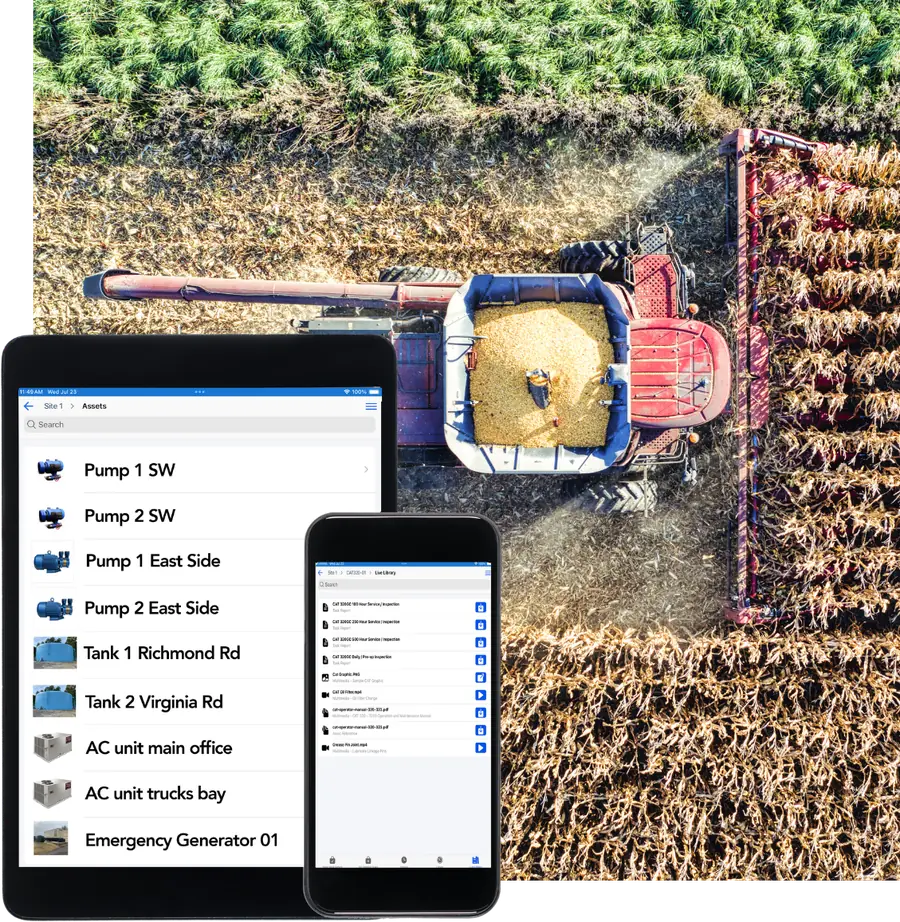
OptiAM is enterprise asset management (EAM) and CMMS software built on Reliability Centered Maintenance. It was built for operations where equipment has to run on a schedule the weather sets. Tractors, harvesters, irrigation, trucks and pack line equipment all live in one system, with service based on engine hours and real usage instead of a calendar date somebody picked. Your mechanics get the work on a phone or tablet that keeps working at the far end of a ranch with no signal, then syncs when it comes back in range.
Preseason & In-Season Readiness
Know What Is Ready Before the Season Starts
The worst time to find out a machine needs a rebuild is the week you need it. OptiAM builds the off-season list off real service history and hour meter readings, so the shop knows in November what has to come apart before spring. In season it flips: the system shows what is due, what can wait until after the window closes, and what has to be pulled now before it takes something else with it.
- Preseason readiness checklists by machine, so nothing gets missed in the rush
- Multi-level sign-offs, so a job cannot close until the shop foreman approves it
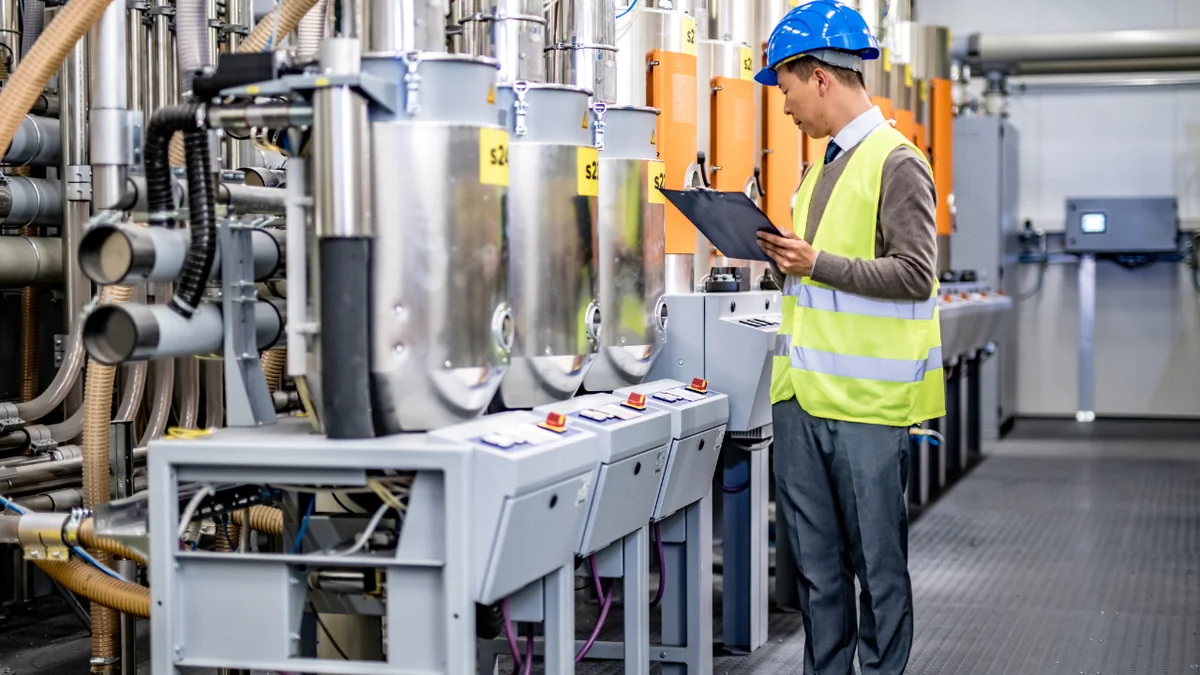
- Step-by-step instructions and video at the point of work, so a seasonal hire does it the same way as a 20-year mechanic
- Time-stamped service records for any machine, ready for a food safety or customer audit
Parts, Shops and Ranches
Stop Buying the Same Part Twice
Across a dozen ranches, a main shop and the outlying yards, the same part is sitting in four places and nobody can see all four. So it gets bought again, with freight on top, while the one you already own sits 40 miles away. OptiAM tracks stock by location, sets reorder points per site, and shows you what you have before a PO goes out.
- Stock tracked by shop, ranch and service truck, not one lump number
- Reorder points set per location, so the main shop and the outlying yards each carry what they actually use
- Parts tied to the machines they fit, so the right filter comes up with the work order
- Move surplus between locations instead of buying it twice
From the Foreman Truck to the Cotton Picker to the Pack Line
Run the whole operation on one platform, with unlimited sites and assets. Every ranch, every shop, every plant and every machine on one hierarchy, whether you farm 2,000 acres or 200,000.
Field Equipment and Harvest
Tractors, combines, cotton pickers, harvesters, sprayers, floaters, spreaders, planters, balers, mowers and pull-behind implements.
Fleet, Shop and Irrigation
Foreman and crew trucks, service trucks, semis and trailers, loaders, UTVs, well pumps, booster pumps, pivots, filter stations, VFDs and shop equipment.
Packing, Processing and Dairy
Wash and grading lines, hydrocoolers, cold storage, compressors, palletizers, milking parlors, vacuum pumps, bulk tanks and feed mixers.
Capabilities
From Work Orders to Parts, in One Place
Maintenance Optimizer
Service by Hours, Not by Date. Schedule on engine hours, real usage, or condition readings instead of a calendar date somebody picked. A tractor that ran 300 hours in March and 40 in July gets serviced when it actually needs it, not on the first of the month.
Work Order Manager
One Queue for the Shop and the Field. Plan, assign and sign off work with parent and subordinate work orders, so a full harvester teardown and every task under it stay tied together and nothing gets lost.
Inventory Manager
Parts Across Every Shop and Ranch. Track serialized and bulk stock by location, set reorder points per shop, and move surplus between yards instead of buying the same filter twice.
Asset Manager
One Record Per Machine, Hours and All. QR code and RFID tags pull up serial number, make and model, warranty, vendor and full service history right there at the machine, on a phone, without walking back to the office.
Management Center
A Live View of Every Ranch. One dashboard shows what is down, what is due and where the backlog sits across every ranch and shop, so you can move a mechanic before a problem turns into a lost day.
Task Developer
Procedures Your Mechanics Actually Follow. Build checklists, standard operating procedures and lockout/tagout steps with photos and video, so a seasonal hire and a 20-year mechanic close the job the same way.
Trusted Where Uptime is the Business
“The OptiAM team has been extremely helpful in explaining the software and identifying features that are applicable to our situation. The software is flexible and the team is open to our feedback. They are constantly making improvements to the software.”
— Travis Martyn, LafargeHolcim
“In the past, we were only capable of updating maintenance plans annually, because the master document was kept locally and distributed as hard copies. Now, because of OptiAM, we can make changes to PM tasks within minutes, immediately accessible to all users around the country.”
— Moran Towing
Built on Reliability Centered Maintenance (SAE JA1011) and ISO 55000, from Andromeda Systems, an ISO 9001:2015 veteran-owned company that has supported some of the U.S. military’s most demanding fleets.
Why Growers Pick OptiAM
Offline-first mobile that works at the far end of a ranch with no signal
Built on RCM analytics, not a work-order log, so reliability improves season over season across every site
Every ranch, machine, truck and pack line on one platform, with no asset limits
Rapid implementation, with your team working in the system in weeks
Grower, Packer and Processor in One System
The largest operations we work with are not one business. There is farming across ranches and counties, a cooler and packing line in the middle, a processing plant on the back end, and a truck fleet moving product between all of it. OptiAM runs the whole operation on one asset hierarchy, one parts list and one schedule, so a harvester in the field and a hydrocooler at the plant are managed the same way, by the same rules, with the same service history behind them. If the back end is the harder half, start there: food and beverage, manufacturing and plants, or landscaping and grounds equipment, or trucks and heavy equipment.
See What OptiAM Does for Your Operation
Book a 30-minute demo. We will look at your equipment, your shops and your season, and show you what running all of it in one system looks like.
A short call so we understand your operation
A walkthrough on equipment like yours
A rollout plan that has you live in weeks
Common Questions
What is the best CMMS for farm equipment maintenance?
The right one is the one your mechanics will actually use in the shop and out in the field. For a farming operation that means three things. It has to schedule on engine hours and real usage, not calendar dates, because a tractor that ran 300 hours in March and 40 in July does not need the same interval. It has to work offline, because half your equipment is somewhere with no signal. And it has to handle the field side and the pack house or plant side in one system, since most operations are running both. OptiAM does all three, and it is built on Reliability Centered Maintenance, so the PM program gets tighter as service history builds instead of staying whatever somebody guessed on day one.
Does OptiAM work offline out in the field?
Yes. OptiAM GO is a progressive web app that works fully offline on Apple and Android phones and tablets. A mechanic can pull up the machine record, work the checklist, log hours and add photos at the far end of a ranch with no bars, and everything syncs when the device gets back in range.
Can OptiAM schedule service by engine hours instead of dates?
Yes, and that is the core of it. You set service on runtime hours, usage, or condition readings instead of a date on a calendar. Hour meter readings come in through the work order or at inspection, and the PM triggers off actual use. Equipment that sat all summer does not get serviced for no reason, and equipment that ran hard does not blow past its interval because the calendar said it was fine.
Does OptiAM work for dairy operations?
Yes. A dairy is a maintenance operation that happens to produce milk. Milking parlors, vacuum pumps, plate coolers, bulk tanks, compressors, feed mixers, skid steers and the trucks are all assets with service intervals, and most of them cannot go down without an immediate problem. OptiAM handles the parlor equipment, the feed side, the fleet and the field equipment in one system, with sanitation and inspection procedures built into the work order.
What equipment can OptiAM manage?
Anything with a maintenance requirement. Field and harvest equipment like tractors, combines, cotton pickers, sprayers, floaters, spreaders, planters and balers. Fleet like foreman trucks, service trucks, semis, trailers, loaders and UTVs. Irrigation like well pumps, booster pumps, pivots, filter stations and VFDs. And the processing side, including wash and grading lines, hydrocoolers, cold storage, compressors, palletizers, milking parlors and bulk tanks. There is no asset limit.
Can foremen and crew leads submit work requests?
Yes. Requests come into the same queue as planned work, so a foreman who spots a leak on a pivot can put it in from his phone and it lands with everything else the shop is tracking. No separate inbox, no text message that gets buried. You see the request, the priority and the history on that machine in one place.
How fast can we get OptiAM running?
Weeks, not months. You bring the asset list, we handle the build. Most operations are working live in the system within weeks, usually starting with one shop or one ranch and rolling out from there. We will walk you through a rollout plan on the demo call.
Can OptiAM manage multiple ranches and shops in one system?
Yes. OptiAM handles unlimited sites and assets on one platform. Every ranch, shop, yard and pack house rolls up into one view, so you can see what is down and where the backlog sits across the whole operation, then drill into a single location when you need to. Parts are tracked by location, so the main shop and the outlying yards each carry what they actually use.
Is OptiAM cloud-based or installed?
Either. OptiAM runs as SaaS or installed on your own infrastructure, depending on what your IT setup and your policies call for.
How is OptiAM different from a generic CMMS?
Most CMMS tools are work-order logs. They record what you did, and that is it. OptiAM is built on Reliability Centered Maintenance and ISO 55000, so it uses the service history you are already logging to adjust intervals and show you which failures are actually costing you. In practice that means the PM program gets tighter and cheaper every season instead of staying whatever somebody set up the first year.
How do we get ready for next season instead of reacting all year?
Start by getting it out of people’s heads and into one list. Pull every machine into the system with its hour meter reading and whatever service history you have, then let the off-season list build itself off real usage instead of memory. The first year you will find equipment nobody was tracking and parts you already own sitting in three places. After that you are planning the off-season off data, and the week before the window opens stops being a fire drill.

Contact us
Connect with us
Capabilities
Enterprise Asset Management (EAM)
Computerized Maintenance Management System (CMMS)
Preventive Maintenance
Analytics & Reporting