
CMMS and EAM software for facilities teams
CMMS Software Built for Facilities Teams
When the chiller quits in August or the fire panel fails inspection, the cost is not the repair. It is a building full of complaints, a crew pulled off everything else, and an inspector waiting on records you cannot find. OptiAM runs every building, every system, and every crew in one place, with preventive maintenance, work orders, service requests, spare parts, inspection records, and a deferred maintenance list you can actually budget from.
Proven reliability methods, without the enterprise price tag. Runs on any device, online or off. Up and running in weeks, not months.
See OptiAM on Your Buildings
Tell us about your sites and we will set up a 30-minute walkthrough.
"*" indicates required fields
Reactive Maintenance is the Most Expensive Way to Run a Building
Most facilities teams still fix equipment after it fails. That is the costliest way to work, and the bill does not stop at the part. Every unplanned failure pushes planned work further back, and that backlog is what eventually turns into a capital request nobody budgeted for.
One failure fills your day with complaints
A down rooftop unit, a stuck elevator, or a failed water heater turns into occupant calls, emergency vendor rates, and a crew pulled off everything else they were scheduled to do that week.
The building tells on you first
No heat on a Monday is a tenant call before it is a work order. You pay the after-hours rate and you still spend the week explaining it.
Paper records don't hold up in an inspection
Handwritten PM sheets and clipboard checklists are easy to lose and slow to produce when a fire marshal, a surveyor, or your insurance carrier asks.
OptiAM® EAM Software
One System to Run Maintenance Across Every Building and Site
OptiAM is enterprise asset management (EAM) and CMMS software built on Reliability Centered Maintenance. It schedules maintenance by how your equipment actually gets used, tracks every asset and spare part across every building, campus, and site, and puts procedures and work orders on a phone that works in a basement mechanical room with no signal. The methods come from aviation, where a missed failure is never an option. Facilities teams use it to move from firefighting to planned, optimized maintenance.
Safety & Compliance
Inspection and Life Safety Records That Hold Up
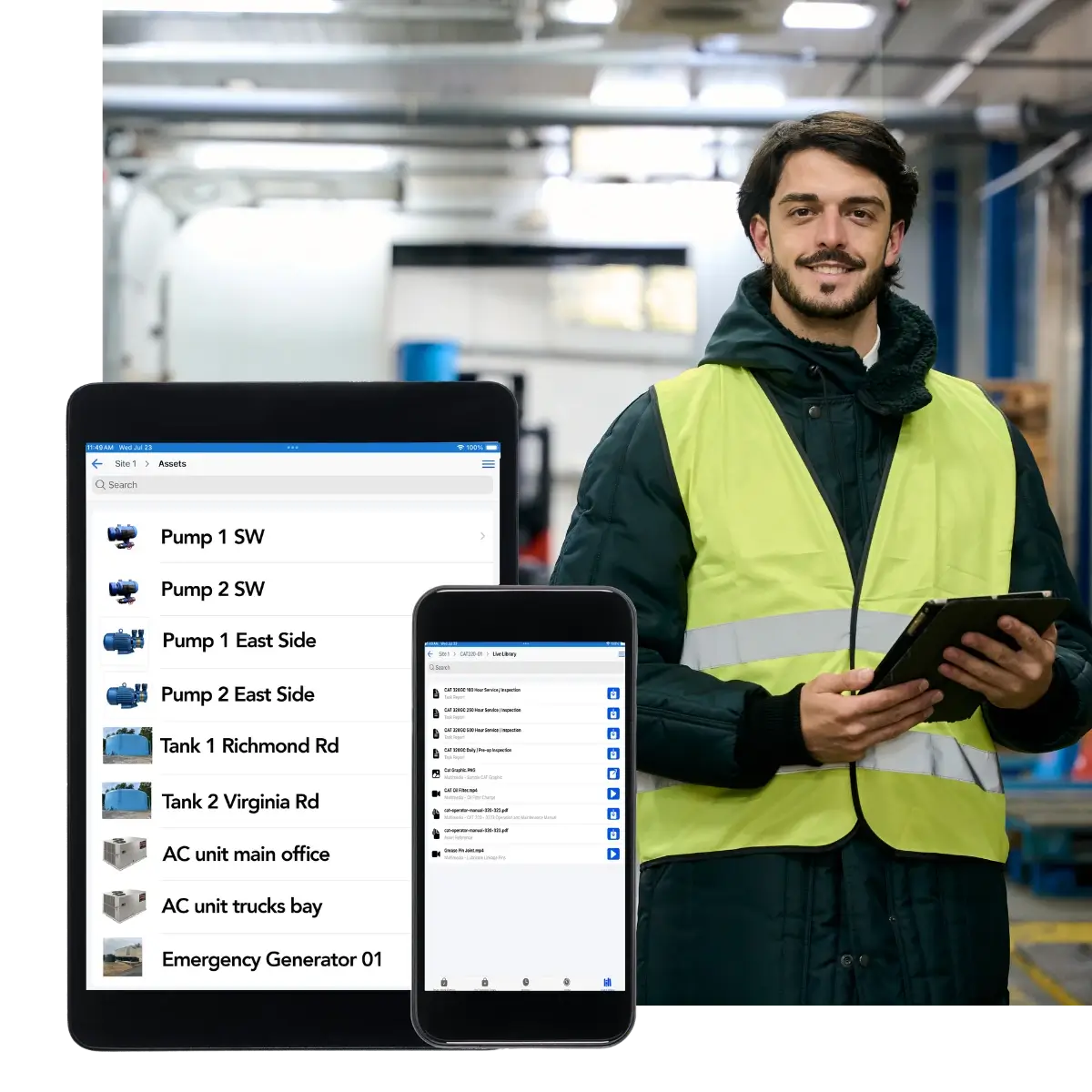
Fire alarm and sprinkler inspections, backflow tests, elevator certificates, emergency generator runs, and lockout/tagout steps live inside the work order instead of a binder in the shop. Revisions are controlled, so nobody works off an outdated sheet, and every completed job leaves a time-stamped record you can produce on demand. Techs follow the same steps in a mechanical room, on a roof, or in a building across campus, because OptiAM GO works fully offline on Apple, Android, and Windows.
- Fire, life safety, and lockout/tagout steps built into the work order, with controlled revisions
- Multi-level sign-offs, so a job cannot close until the right supervisor approves it
- Step-by-step instructions and video at the point of work, so every tech does it the same way
- Time-stamped completion records for any asset, searchable on demand

Inspection Readiness
Maintenance Evidence Ready for Any Inspection or Survey
Inspectors and surveyors ask the same three questions: is the equipment maintained, is there a defined schedule, and can you prove it. OptiAM answers all three from one system. Every finding a tech logs becomes a work order, tracked all the way to close-out, and every asset carries a complete maintenance history you can pull up in front of a fire marshal or a surveyor.
- Digital inspection and PM checklists with time stamps and sign-off
- Finding to work order to close-out, documented end to end
- Searchable maintenance history for any asset, on demand
- Standard operating procedures and emergency procedures with version control
Built for Every Building You Run, From the Roof to the Boiler Room
Manage the whole portfolio on one platform, with unlimited sites and assets. Every building, every system, and every piece of grounds and fleet equipment sits in the same system, on the same hierarchy, with the same maintenance history behind it.
HVAC and Mechanical
Rooftop units, air handlers, chillers, cooling towers, boilers, pumps, VAV boxes, exhaust fans, and building automation controls
Life Safety and Building Systems
Fire alarm panels, sprinkler systems, extinguishers, emergency lighting, elevators, backflow preventers, emergency generators, switchgear, and plumbing
Grounds, Fleet, and Support Equipment
Mowers, snow equipment, service trucks and vans, carts, forklifts, kitchen and laundry equipment, plus shop tooling and calibrated test gear
Capabilities
From Work Orders to Spare Parts, in One Place
Maintenance Optimizer
Usage-Based Preventive Maintenance. Schedule on real runtime hours and condition data instead of the calendar, so a chiller that runs all summer and a standby generator that runs once a month each get serviced when they need it. Wear rates change with load and season, and OptiAM schedules to match.
Work Order Manager
Work Orders and Service Requests in One Queue. Plan, assign, and sign off maintenance with parent and subordinate work orders that route across trades and buildings, so a chiller overhaul or a summer shutdown stays coordinated from one record.
Inventory Manager
Spare Parts Across Every Building. Track serialized and bulk stock, set reorder points per shop, and move surplus belts, filters, motors, or pumps between buildings instead of buying them twice.
Asset Manager
One Asset Record, Found Fast. QR code and RFID tags pull up serial number, warranty, vendor, and full service history at the unit, and Hardware Builder breakdowns show exactly what goes where, so techs stop hunting for records or ordering the wrong filter.
Management Center
A Live View of Every Building. One dashboard shows what is down, what is due, and where the backlog is across every building and site, so you can move people and parts to the right place first and show leadership where the deferred work actually sits.
Task Developer
Procedures Your Techs Actually Follow. Build checklists, standard operating procedures, and emergency procedures with controlled revisions, then deliver them, along with every manual and spec sheet in Live Library, straight to the phone through OptiAM GO.
Trusted Where Uptime is the Business
“The OptiAM team has been extremely helpful in explaining the software and identifying features that are applicable to our situation. The software is flexible and the team is open to our feedback. They are constantly making improvements to the software.”
— Travis Martyn, LafargeHolcim
“In the past, we were only capable of updating maintenance plans annually, because the master document was kept locally and distributed as hard copies. Now, because of OptiAM, we can make changes to PM tasks within minutes, immediately accessible to all users around the country.”
— Moran Towing
Built on Reliability Centered Maintenance (SAE JA1011) and ISO 55000, from Andromeda Systems, an ISO 9001:2015 veteran-owned company that has supported some of the U.S. military’s most demanding fleets.
Why Facilities Teams Pick OptiAM
Offline-first mobile that works in basements, mechanical rooms, and roof access
Built on RCM analytics, not just a work-order log, so maintenance improves over time
Every building, system and vehicle on one platform, with no asset limits
Rapid implementation, with your team working in the system in weeks, not months
Facilities Are Usually Only Half the Job
Most teams we work with run more than the buildings. There is a central plant behind them, grounds around them, and often a public or campus mandate on top of it. OptiAM handles all of it in the same system on the same hierarchy. If that is your side of the operation, we have a page for it too: energy and utilities, government and public works, schools and campuses, or landscaping and grounds.
See What OptiAM Does for Your Buildings
Book a 30-minute demo. We will look at your buildings, your systems, your inspection schedule, and your deferred maintenance list, and show you exactly how OptiAM handles them.
A short call so we understand your sites
A walkthrough on equipment like yours
A rollout plan that has you live in weeks
Common Questions
What is the best CMMS for facilities management?
The right one is the one your techs will actually use in the field. For a facilities team that usually means preventive maintenance driven by real runtime instead of a calendar, work orders and service requests in one queue that route across trades and buildings, spare parts tied to a shop, and procedures a tech can pull up in a basement mechanical room with no signal. OptiAM does all of that in one system and adds Reliability Centered Maintenance analysis on top, so your PM program gets better over time instead of just recording what already broke.
Does OptiAM work offline in a basement or mechanical room?
Yes. OptiAM GO is a progressive web app that works fully offline on Apple, Android, and Windows devices. Techs complete work orders, run checklists, capture photos, scan parts, and pull up asset history in a boiler room, on a roof, or in a building with no signal. Everything syncs automatically when the device is back in range.
How does OptiAM support life safety and inspection compliance?
Fire alarm and sprinkler inspections, backflow tests, elevator certificates, emergency generator runs, and lockout/tagout steps are built into the task package, so they travel with the work order to the technician’s device. Revisions are controlled, so nobody works off an outdated sheet, and work orders support multi-level sign-off so a job cannot close until the right person approves it. Every completed job leaves a time-stamped record you can produce for a fire marshal, an insurance carrier, or an internal safety audit.
Will OptiAM help with inspections and accreditation surveys?
Yes. Inspectors and surveyors want to see that equipment is maintained on a defined schedule, that the work actually happened, and that you can prove it. OptiAM holds the schedule, the completed work orders, the maintenance history for every asset, and the controlled procedures behind them. When someone asks for evidence on a specific generator, fire pump, or air handler, you pull it up instead of digging through binders.
What equipment can OptiAM manage?
Anything with a maintenance requirement. HVAC and mechanical like rooftop units, air handlers, chillers, cooling towers, boilers, pumps, and building automation. Life safety and building systems like fire panels, sprinklers, extinguishers, emergency lighting, elevators, backflow preventers, generators, switchgear, and plumbing. Plus grounds and fleet equipment, kitchen and laundry equipment, and the shop tooling and calibrated test gear behind all of it.
Can OptiAM handle service requests from staff and tenants?
Yes. Requests come into the same queue as planned work, so a broken thermostat and a scheduled filter change sit in one backlog your team prioritizes together. Every request becomes a tracked work order with an owner, a status and a close-out record, which is what turns a vague sense that you get a lot of calls into a number you can put in front of leadership.
How fast can we get OptiAM running?
Weeks, not months. You bring the asset list, we handle the build and walk your team through it. If your data lives in spreadsheets, binders, or another system, that is normal. Getting it into shape is part of getting started, not something you have to finish first.
Can OptiAM manage maintenance across multiple buildings and campuses?
Yes. OptiAM handles unlimited sites and assets on one platform, with physical and functional hierarchies so every building, floor and system rolls up correctly. Inventory is tracked per shop with location-specific reorder points, and you can see combined stock at any level of the hierarchy, so you can move a surplus part between buildings instead of buying another.
Is OptiAM cloud-based or installed?
Either. OptiAM runs as SaaS or installed on your own infrastructure, so it works for districts, hospitals and agencies with strict IT or security requirements as well as for teams that would rather not run another server.
How is OptiAM different from a generic CMMS?
Most CMMS tools are work-order logs. They record what you did after you already decided to do it. OptiAM is built on Reliability Centered Maintenance and Supportability Analysis, so it looks at how your assets actually fail and tells you what to maintain, how often, and what it costs you to get it wrong. That is the difference between tracking maintenance and improving it.
How do we get our deferred maintenance backlog under control?
Start by getting it out of people’s heads and into one list. Every finding a tech logs becomes a work order with an asset, a priority and a cost attached, so the backlog stops being a feeling and becomes a report. From there OptiAM’s Reliability Centered Maintenance analysis tells you which deferred items are actually likely to fail and what it costs you when they do, which is the difference between a wish list and a capital request that gets funded..

Contact us
Connect with us
Capabilities
Enterprise Asset Management (EAM)
Computerized Maintenance Management System (CMMS)
Preventive Maintenance
Analytics & Reporting